
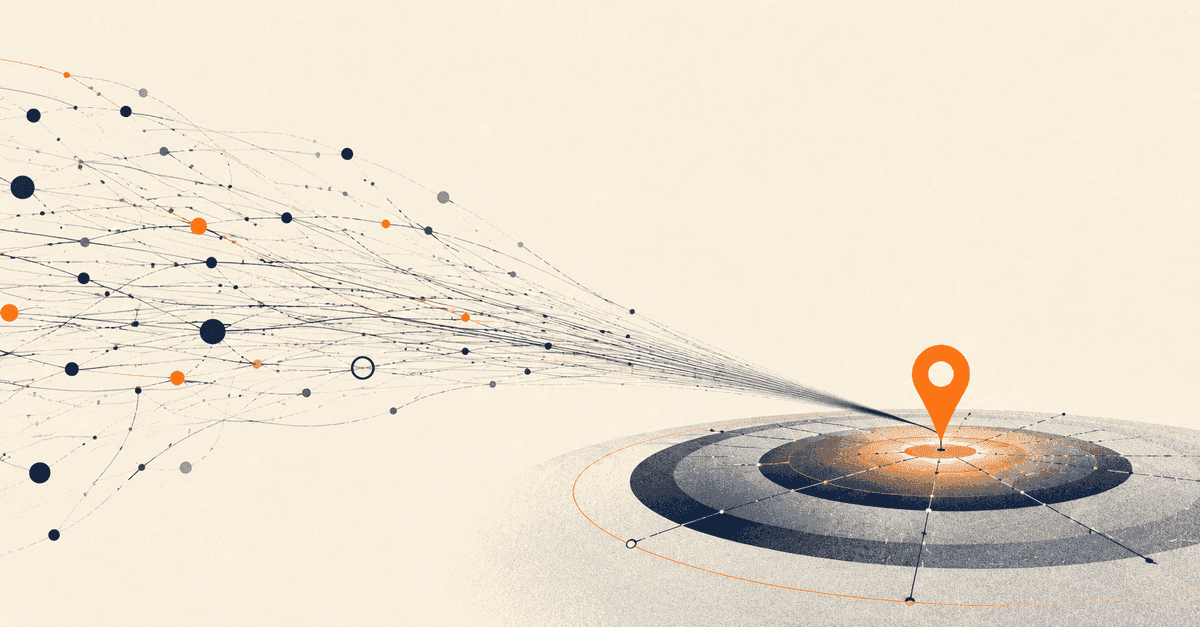
AUSTRAC has detailed a case that says more about where the AML/CTF regime is heading than most policy documents do. Its financial intelligence helped the Western Australia Joint Organised Crime Task Force locate an alleged fugitive and charge three people over a plot to smuggle a wanted Queensland man out of the state. The 32-year-old, an alleged outlaw motorcycle gang member, appeared in the Perth Magistrates Court and was extradited to Queensland to face a return-to-prison warrant and a drug trafficking arrest warrant. He is also wanted for questioning over multiple serious crimes. (AUSTRAC's account of the case (opens in a new tab), and the AFP media release (opens in a new tab))
Read past the cops-and-robbers headline. The arrest came just a week after AUSTRAC intelligence located a different person, a foreign national extradited from Sydney for alleged property crimes in her home country. Two people found in two cases in roughly seven days, both through financial intelligence. That is not a coincidence. It is a method working as designed, and from 1 July 2026 around 90,000 Tranche 2 firms become part of the machinery that makes it work.
The Sentence Worth Re-Reading
AUSTRAC CEO Brendan Thomas put the shift plainly:
"Financial intelligence is not just about following the money; it's increasingly about identifying people and pinpointing their movements."
He went further on this specific case: "transaction data helped authorities locate the individual and disrupt an attempted escape before it could succeed," and the broader goal is "turning financial data into actionable intelligence, helping law enforcement move faster to identify, track and apprehend people of interest."
Sit with what changed. "Follow the money" has always implied a slow, retrospective trace: a crime happens, investigators reconstruct the flow afterwards, the money is the evidence. The fugitive case is something else. The money was not the target. The person was. Transactions were used to place a human being in time and space, in near real time, to stop an escape that had not finished happening yet. Financial data became a positioning system.
That is a meaningful escalation of what the reports your firm files are actually for.
How a Transaction Becomes a Location
You do not need to be in organised crime intelligence to see the mechanism. Think about what a single card payment, transfer, or withdrawal actually contains: an amount, a time, a counterparty, and very often a place. String enough of them together and you do not just have a money trail, you have a movement trail. Where someone bought fuel. Which city a transfer originated from. When an account went quiet and where it went active again.
AUSTRAC does not generate that data. It receives it. The intelligence that located the fugitive was facilitated through the Fintel Alliance (opens in a new tab), AUSTRAC's public-private partnership, which it describes as providing specialised intelligence that can track down individuals and map their movements through transactions. The Alliance is analysis sitting on top of reported data. Strip out the reports and there is nothing to analyse. The capability is real, but it is downstream of reporting entities doing their job.
This is the same logic AUSTRAC has been funding at scale, including the $5 million it recently committed to Pacific financial intelligence and AI detection. The fugitive case is that doctrine producing a domestic result you can point to.
Why This Lands on a Small Firm
Here is the connection for the accountant in Parramatta, the conveyancer in Geelong, the real estate agent in Perth. From 1 July 2026 you are a sensor in this system, whether or not you ever see a case like this one.
Your reports are the raw material that makes a person visible. Customer due diligence ties a real, verified identity to the activity, so a transaction is attached to a known human rather than an anonymous account. (What initial CDD actually involves, and when it has to happen) Source of funds and source of wealth explain where money came from, which is what turns an ordinary-looking payment into a flagged anomaly. (Source of funds versus source of wealth, in practice) A suspicious matter report is the single highest-value signal you can send, because it is a human telling AUSTRAC "look here." (How SMR and TTR reporting actually works)
Reframe the fugitive case around your own desk. If a person of interest moves money through a settlement, a trust account, or a professional service, the quality and timeliness of the report attached to that movement is part of whether they stay visible or drop off the map. A late SMR is not a tidy-up-next-quarter task. It is a sensor reading that arrives after the moment it mattered.
Timeliness Is the Quiet Lesson
The detail in this case that small firms should not skip is the speed. AUSTRAC disrupted the escape "before it could succeed." Intelligence that arrives a month late would have been a post-mortem, not an intervention.
For a reporting entity, that puts a spotlight on the parts of your program people treat as optional:
- The SMR trigger and turnaround. Suspicious matter reports have firm statutory timeframes once you form the suspicion. The slower lesson here is cultural, not legal: a firm that rationalises suspicion away, or sits on it, removes a reading from a system that depends on speed. Build a workflow that recognises and reports, rather than one that waits and forgets. (Worked SMR examples for professional firms)
- Ongoing customer monitoring. Movement only shows up if someone is still watching after onboarding. A documented review schedule tied to risk rating, plus clear events that trigger an unscheduled look (a new beneficial owner, a sudden change in transaction pattern, a link to a higher-risk jurisdiction), is what keeps the data current. (What a Part A to F program looks like in practice)
- Clean, complete records. A report that is vague about counterparty, timing, or place is a weaker signal. The system maps movements from specifics. Precision in your files is precision in the intelligence picture.
The Uncomfortable Mirror
There is a second-order point worth naming. A capability that locates people from transaction data is, by definition, very good at noticing where data should exist and does not. The same analysis that places a fugitive also surfaces the firm that filed nothing while a textbook pattern ran through its accounts, or the firm whose customer monitoring existed on paper and produced no actual reviews.
AUSTRAC increasingly works backwards from data, as its recent transaction-monitoring audit actions show. It can see the shape of the reports that should be there. Being part of an intelligence system cuts both ways: it raises the value of doing the work properly, and the visibility of not doing it.
The One Line To Take Away
"Follow the money" has quietly become "find the person." AUSTRAC has just shown it can turn transaction data into someone's location fast enough to stop them leaving the country. From 1 July 2026 your firm is one of the sources that data comes from. The question the regulator is implicitly asking every new reporting entity is simple: when a person of interest moves through your client base, will your reports help place them, or will your program be the blind spot?
With eight days until obligations begin on 1 July 2026, if you are not yet enrolled or your program is still a template rather than something you operate, this is the week to close that gap. (What Tranche 2 enrolment actually involves)
Where AML Mate Fits
AML Mate builds the "make it visible" half that this intelligence depends on: a compliance plan and Part A to F program mapped to your designated services, a client CDD and source-of-funds workflow, and a customer monitoring framework that produces a documented, dated review trail rather than a once-a-year box-tick. The free compliance check at /check gives you a five-minute read on where your gaps are before you commit to anything. Eight days out, that is five minutes well spent.