
Which services are covered?
Check the full service definition and any exceptions. Under Table 6, relevant work can include:
Property and business transactions
Advancing property transactions or transfers of controlling interests in companies or legal arrangements.
Client money and property
Handling or managing client property as part of a transaction, subject to the client-money exceptions.
Financing and business structures
Advancing corporate or legal-arrangement financing, creation or restructuring, including trusts.
Company and address services
Selling shelf companies, nominee or officeholder arrangements, and providing a registered office or principal place of business address instead of the client's operating address.
Tax returns, BAS and general advice
Routine tax returns, BAS preparation and bookkeeping do not automatically make a practice regulated. For the transaction-related services, general advice alone is different from taking steps that directly advance the transaction. Review any additional money handling, company formation or address services separately.
Review the engagement, not just its name
Record what you actually do, your authority, the transaction or structure involved and the relevant service definition. If scope is uncertain, use AUSTRAC's guidance or obtain advice before treating the engagement as outside the regime.
Why are accountants now covered?

Professional services can be misused to move funds or conceal ownership. The Tranche 2 reforms extended AML/CTF obligations to designated professional services from 1 July 2026. This does not mean every accountant or client is high risk; controls need to reflect the services and risks of the practice.
What you need to do
Step 1: Determine if you provide designated services
Map your engagements to the services above, including occasional work. Check the geographical link to Australia and any applicable exceptions. Our free compliance check is a starting point, not a binding determination of your obligations.
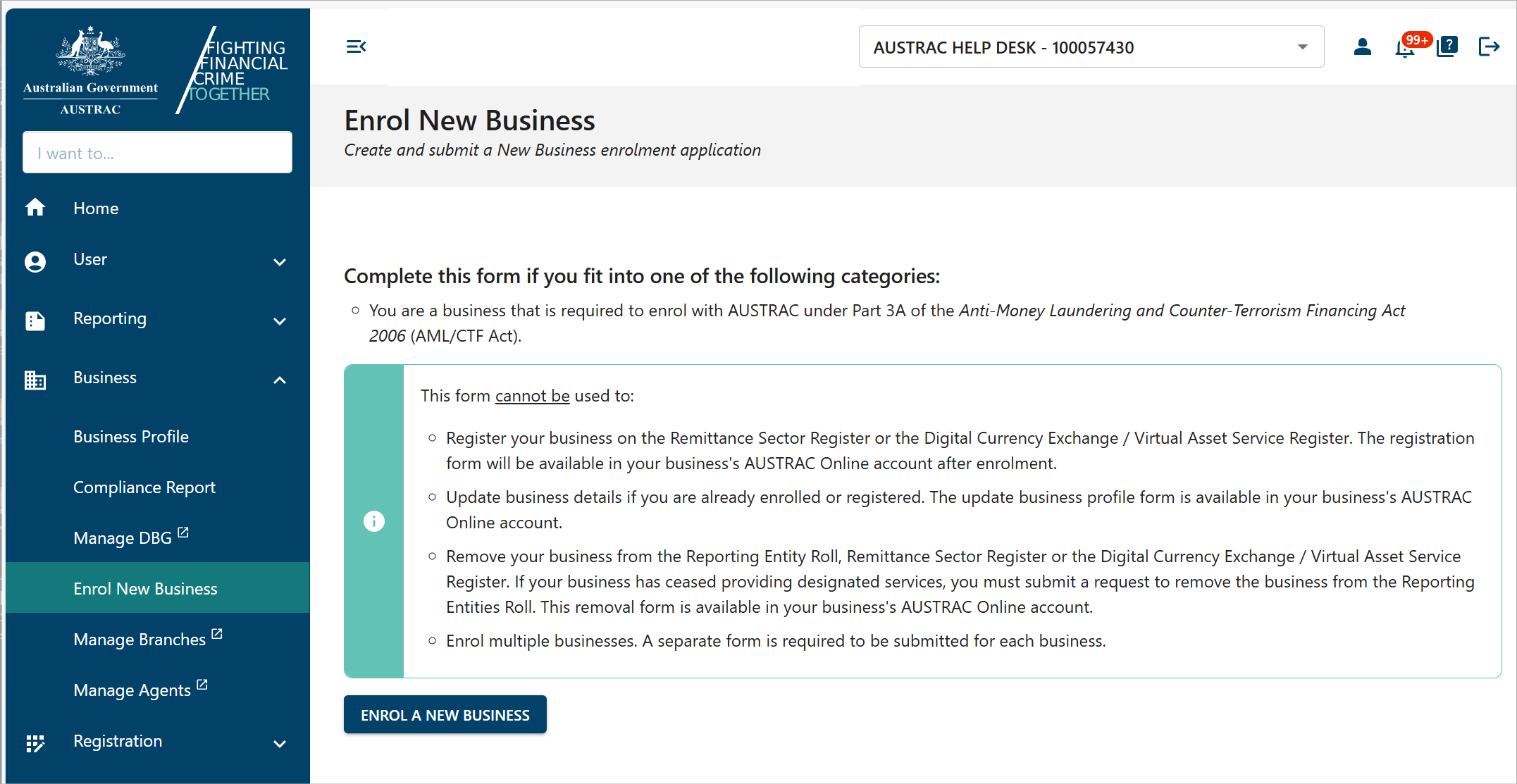
Step 2: Enrol with AUSTRAC
The 29 July 2026 enrolment deadline for existing newly regulated providers has passed. If you have not enrolled, act promptly. For a new provider, apply no later than 28 days after the day you start providing a designated service. Enrolment does not replace your other obligations.
 Click to enlarge
Step 3: Create your AML/CTF program
Document your risk assessment and AML/CTF policies, tailored to the nature, size and complexity of your practice. Put the program in place before providing designated services, obtain senior manager approval and use it in daily work. Assign compliance responsibilities, train relevant personnel, maintain records and arrange reviews and independent evaluations.
AML Mate supports an editable program draft, client records and PDF/Word exports. You must review the draft, adapt it to your practice, obtain the required approval and implement the controls. Software does not establish that your practice is compliant.
Step 4: Implement CDD for your clients
Initial checks
Generally complete initial customer due diligence before providing the designated service. Establish identity using reliable, independent information appropriate to the risk, rather than assuming a photo ID copy alone is enough. Check the rules for delayed CDD and transitioning existing customers where relevant.
Ownership and control
For entities and arrangements, identify any individual who ultimately owns 25% or more, or otherwise controls the customer. Control is a separate test and does not require a 25% ownership interest. Establish the purpose of the relationship, assess risk and check relevant PEP and targeted financial sanctions status.
Risk and ongoing review
Apply enhanced CDD when a statutory trigger applies, including high customer risk or a relevant foreign PEP. Domestic and international organisation PEPs do not automatically mean enhanced CDD; their risk matters. Monitor relationships and revisit client information and risk as circumstances change.
Step 5: Know your reporting obligations
Identify the reporting trigger and applicable deadline. Not every engagement requires a report.
SMR: within 24 hours of forming a terrorism financing suspicion. For other suspicions, within 3 business days after the day reasonable grounds for suspicion are formed. A qualified legal professional privilege rule can allow 5 business days for non-terrorism matters; see the SMR guide for the conditions.
TTR: when you receive or pay physical currency of A$10,000 or more (or foreign equivalent) in connection with a designated service, report within 10 business days after the day the transaction occurs. An electronic transfer alone is not a physical-currency transaction.
Protect SMR information. Disclosing protected information can be tipping off where it would or could reasonably be expected to prejudice an investigation. Follow your confidentiality controls and obtain advice about exceptions. If an SMR is required and you continue providing the designated service, apply enhanced CDD; do not delay reporting while you complete it.
AML Mate helps prepare report records and does not submit reports to AUSTRAC. Lodge through AUSTRAC Online and retain your reference and receipt.
Common concerns from accountants
I only do tax returns. Do I still need to comply?
Check the complete engagement, including extra services you provide alongside tax work. A client using your practice as its registered office may raise a different service question from preparing its tax return. The scope section above links to the detailed definitions.
Will this scare away my clients?
Explain what information you need for customer checks, why it is relevant and how it will be handled. Keep routine CDD requests separate from protected information about suspicions or reports. Use a consistent onboarding explanation that reflects your actual process.
How much will this cost me?
Costs depend on the services, client volume, risk and support your practice needs. AML Mate's Essentials plan is $49 AUD/month, including GST. Check plan limits and any verification charges when comparing costs.
Frequently asked questions
Do accountants need AML/CTF compliance in Australia?
Yes, when they provide designated services with a geographical link to Australia and no applicable exemption. Being an accountant, tax agent or BAS agent by itself is not the test.
Which accounting services are designated services?
Check Table 6 professional services against each engagement. Examples include transaction-related client property management, company or trust creation, and registered office services. The detailed service conditions and exceptions matter.
Do I need to register with AUSTRAC as an accountant?
A practice providing designated services generally needs to enrol. Separate registration requirements depend on providing remittance or specified virtual asset services, not on being an accountant. Check the services you actually provide.
What does an AML/CTF program for accountants include?
A documented risk assessment and AML/CTF policies suited to the practice, with governance, customer checks, monitoring, reporting, personnel controls, training, records and review. A template must be adapted, approved and implemented.
Resources
Full AML/CTF compliance guide. Use the sources below to check the requirements against your services. Sources checked 14 October 2026.
- AUSTRAC: New reporting regime and July 2026 enrolment deadline
- AUSTRAC: Professional designated services
- AUSTRAC: Who and what AUSTRAC regulates
- AUSTRAC: Enrolment requirements
- AUSTRAC: AML/CTF program requirements
- AUSTRAC: Accounting program starter kit
- AUSTRAC: Initial customer due diligence
- AUSTRAC: Beneficial ownership and control
- AUSTRAC: Enhanced customer due diligence
- AUSTRAC: Politically exposed persons
- AUSTRAC: Ongoing customer due diligence
- AUSTRAC: Suspicious matter reports
- AUSTRAC: Threshold transaction reports
- AUSTRAC: Tipping off