
Enrolment or registration?
Many businesses search for “registering with AUSTRAC”. For most professional practices, the relevant process is enrolment: adding the business to the Reporting Entities Roll. Creating a user login is a separate step.
Registration is an additional requirement for registrable remittance and virtual asset services. Your actual activities determine the requirement, even if you describe your business as an accounting or legal practice.
Generally, you need registration approval before starting those services. Specific transitional rules can allow providers of newly regulated virtual asset services who applied before 29 July 2026 to continue while AUSTRAC decides their application. The enrolment window is not permission to provide an unregistered service. Check the registration requirements.
Who needs to enrol?
Coverage depends on the designated services you provide, a geographical link to Australia and applicable exemptions. Your profession alone does not decide whether you are covered. Relevant activities can include:
- Accountants, tax agents and BAS agents: certain company and trust services, managing client money or assets, and arranging specified transactions.
- Lawyers and conveyancers: specified property, company and trust transactions, and management of client assets.
- Real estate professionals: designated services involving buying or selling property, including relevant agency and property development activities.
- Dealers in precious metals, stones and products: qualifying payments of $10,000 or more in cash, virtual assets or a combination, including linked transactions. Check the detailed service definition. Other services, such as bullion dealing, have their own rules.
This is an overview, not an exhaustive service list. Use our free compliance check as a starting point, then confirm your activities against AUSTRAC's service guidance.
Registration deadline
Starting a new designated service
Apply to enrol no later than 28 days after the day you start providing a designated service. This is the ongoing enrolment rule. Check separate registration requirements before starting any registrable service.
Already providing newly regulated services on 1 July 2026
The deadline was 29 July 2026. That date has passed. If you should have enrolled, apply promptly and address any outstanding obligations. Late enrolment does not erase earlier non-compliance. See AUSTRAC's July commencement guidance.
What to prepare before you start
Gather the information for the legal entity providing the services. The questions vary with your business structure, so check the official preparation checklist and form question preview.
- Business identity
- Legal and trading names, ABN or other identifiers where applicable, business structure and contact details.
- Services and operations
- The designated services you provide or plan to provide, start dates, employee numbers and the financial information requested by the form.
- Ownership and control
- Information about owners, directors, partners or other relevant people, depending on your legal structure. Use the official checklist for your entity type.
- Compliance officer
- The appointed officer’s name, role and contact information, plus the identifying details requested by AUSTRAC.
Step-by-step enrolment on AUSTRAC Online
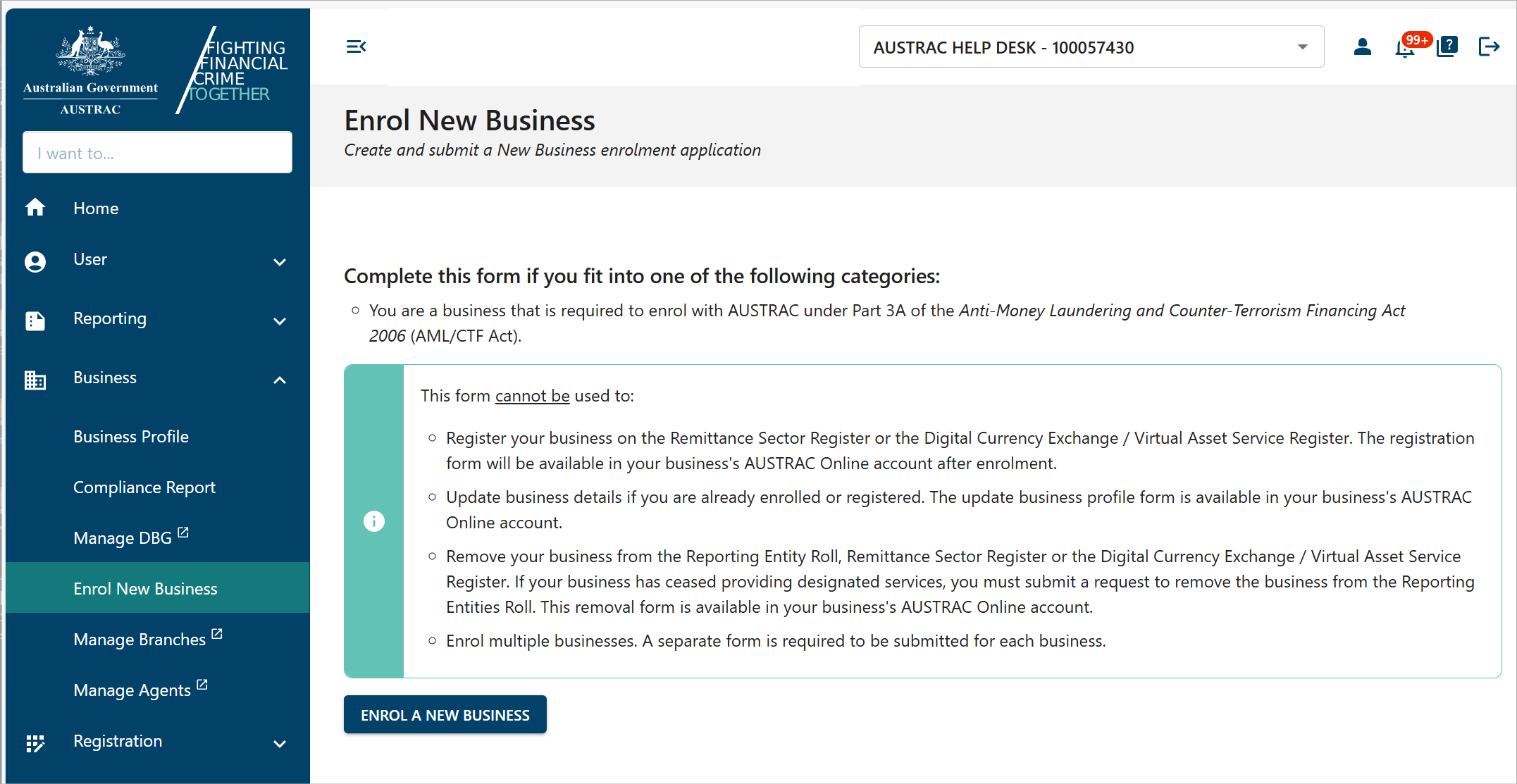
Use the two illustrated tutorials below alongside the portal. Already have a user account? Start with the business enrolment tutorial.
Set up your login and multi-factor authentication, then sign in to AUSTRAC Online. Select Business, then Enrol a new business. Complete the questions, review the details and submit.
 Click to enlarge
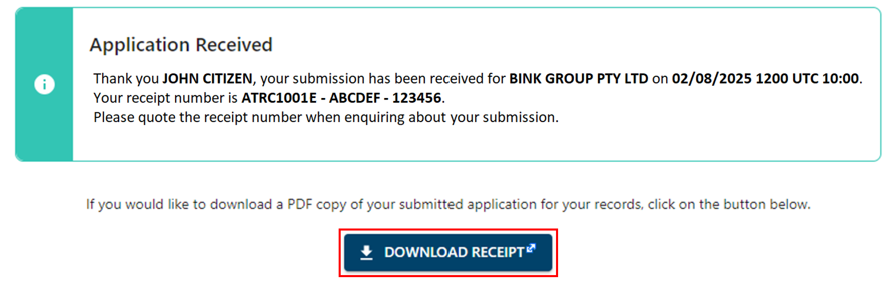
Check for confirmation after submitting
A submission receipt is not confirmation of enrolment. Keep the receipt and your AUSTRAC Account Number (AAN), then check for the separate email confirming that you are enrolled. AUSTRAC may ask for more information. Its enrolment user guide explains the receipt, AAN and confirmation email.
 Click to enlarge
Screenshots © AUSTRAC for the Commonwealth of Australia 2026, used under CC BY 4.0. AUSTRAC does not endorse AML Mate. Original screenshot source. CC BY 4.0.
Common mistakes to avoid
- Stopping at the user account. A login gives you portal access; it does not enrol the business.
- Choosing services by occupation alone. Review each activity against the designated service definitions.
- Leaving the compliance officer unclear. Appoint an appropriate person and check AUSTRAC's officer notification requirements. Sole traders can act as their own officer if they meet the criteria.
- Treating enrolment as the whole compliance task. Your program and operating procedures must be ready when the relevant obligations begin.
- Leaving changed details unreported. Update enrolment details within 14 days of the change, as explained in the enrolment guidance.
After registration: what next?
Enrolment identifies your business to AUSTRAC. Day-to-day compliance also requires:
- A documented risk assessment and AML/CTF policies, with the required review and approval. See the current program framework.
- Customer due diligence procedures and records that support how you identify, verify and monitor customers.
- Staff training and clear responsibility for carrying out the procedures.
- Reporting and record keeping processes. Read the SMR guide and TTR guide for when and how to report.
AML Mate supports program drafting, client records, training and report preparation. It does not enrol your business or submit reports to AUSTRAC. Complete those actions in AUSTRAC Online and retain the official confirmations.
Reporting tutorials
When you need to submit a report, use the corresponding illustrated tutorial. Enrolment alone does not mean a report is due.
Browse all AUSTRAC Online tutorials for annual compliance reports, receipts and report corrections.
Frequently asked questions
How do I register with AUSTRAC?
For most professional practices, the process is enrolment. Create an AUSTRAC Online user account, complete the business enrolment form and keep the submission receipt. Wait for the separate enrolment confirmation. Remittance and virtual asset services can also require registration approval.
When is the AUSTRAC enrolment deadline?
Apply to enrol no later than 28 days after the day you start providing a designated service. For newly regulated businesses already providing those services on 1 July 2026, the deadline was 29 July 2026. That date has passed. If you are late, apply promptly and address any outstanding obligations.
Is AUSTRAC enrolment free?
AUSTRAC’s published enrolment instructions do not list an application fee. You can apply directly through AUSTRAC Online without buying AML Mate or using a paid intermediary. Preparing and maintaining your compliance arrangements can have separate costs.
What happens if I don't register with AUSTRAC?
If your business must enrol and does not, it can face AUSTRAC enforcement action. Providing registrable remittance or virtual asset services without the required registration is a separate issue. Applying late does not erase earlier non-compliance. Check the obligations for your actual services and seek advice if you are unsure.
Resources
- AUSTRAC Tranche 2: What Australian Businesses Need to Know
- AML Compliance for Accountants: Step-by-Step Guide
- AML Compliance for Real Estate Agents
- Full AML/CTF Compliance Guide: 7 Steps
Official sources
Sources checked 14 October 2026. Follow the linked guidance for exceptions and the requirements that apply to your business.
- AUSTRAC: enrolment, the 28-day rule and updating details
- AUSTRAC: remittance and virtual asset registration
- AUSTRAC: who and what is regulated
- AUSTRAC: precious metals, stones and products
- AUSTRAC: July 2026 commencement and enrolment deadline
- AUSTRAC: information to prepare for enrolment
- AUSTRAC: application receipt and enrolment confirmation
- AUSTRAC: your AML/CTF program
- AUSTRAC: appointing and notifying a compliance officer