
Which legal services are covered?
Table 6 sets out the professional designated services. These groups are a starting point, not a substitute for the complete definitions and exceptions.
Property and business transactions
Services that directly advance a real estate transaction or a transfer of a controlling interest in a company or legal arrangement.
Client funds and property
Managing client money, accounts, securities or other property as part of a transaction. Check the specific exceptions before treating all trust account work as covered.
Financing and legal structures
Advancing financing, creation or restructuring of companies or legal arrangements, including relevant trust arrangements.
Company and address services
Selling shelf companies, nominee or officeholder arrangements, and providing a registered office or principal business address instead of the client's operating address.
Why are lawyers now covered?

Legal services can be misused to move funds or obscure who owns assets. Property transfers, trust accounts and company structures are areas where the purpose of a transaction and the source of funds deserve attention. This does not mean that every client is suspicious.
The Tranche 2 reforms brought designated professional services into the AML/CTF regime from 1 July 2026. Coverage depends on the work you do and the applicable conditions, rather than your professional title alone.
Legal professional privilege and reporting
First, identify what is privileged
Legal professional privilege is narrower than client confidentiality. Assess the particular information and the legal basis for privilege; do not classify all client records as privileged or unprivileged.
If all the grounds are privileged
Where all information that would support the SMR obligation is subject to legal professional privilege, no SMR or LPP form is required.
If only some information is privileged
Report the non-privileged information and submit the LPP form where required. For SMRs, the privilege must belong to another person. The qualified non-terrorism reporting period is 5 business days after the day the suspicion forms. This does not extend the terrorism financing deadline.
Privilege can also affect information in a TTR; the LPP form is due with that report. Get independent legal advice if you are uncertain about a claim or reporting obligation.
Six practical steps for your practice
Check your designated services
Map each engagement to the relevant service definition, geographical link to Australia and exceptions. Include occasional work. Record your reasoning; the name of a practice area alone does not settle coverage.
Enrol with AUSTRAC
Existing newly regulated providers were required to enrol by 29 July 2026. If you have not enrolled, act promptly. A new provider generally applies within 28 days after the day it starts providing a designated service. Enrolment does not replace the other obligations.
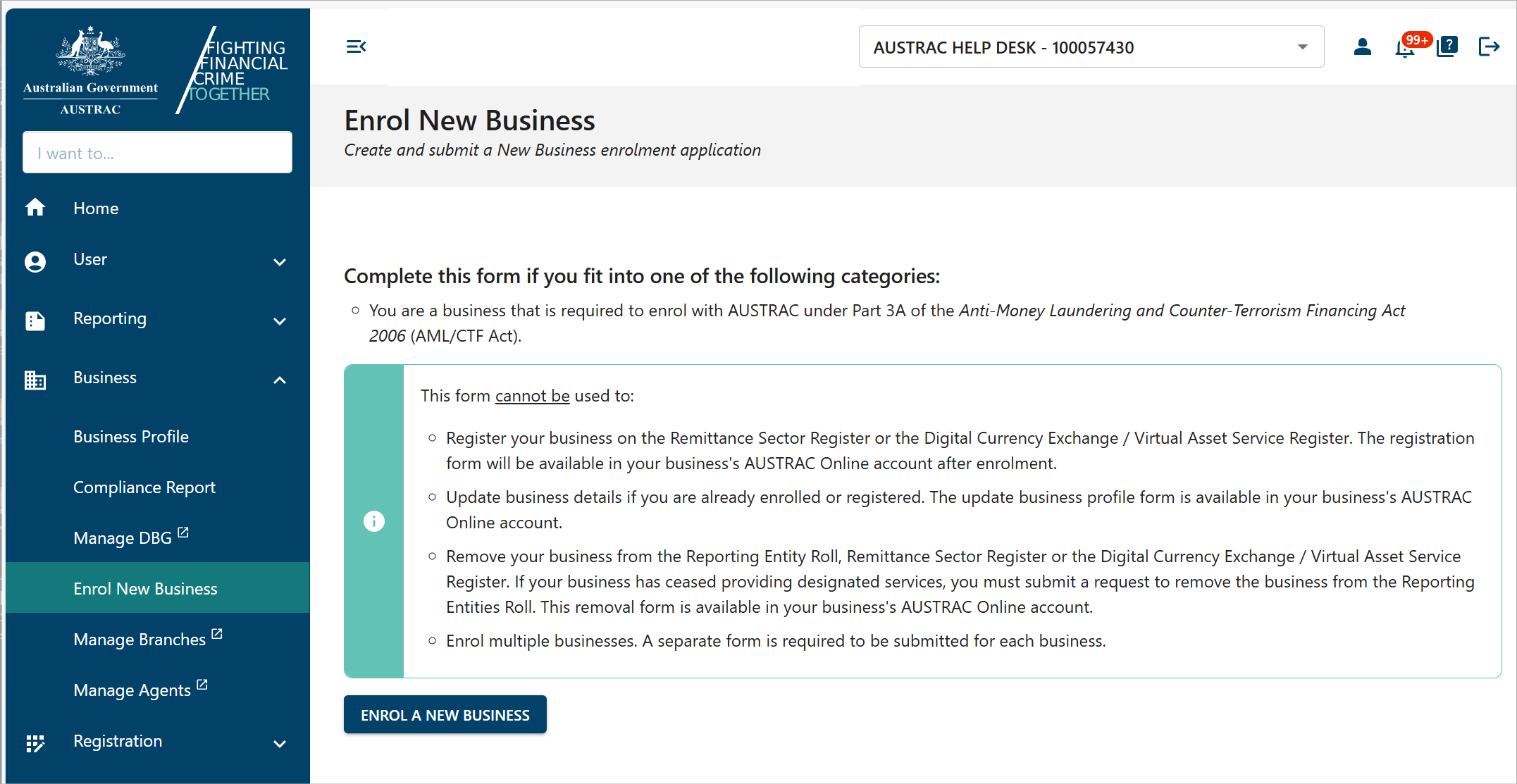 Click to enlarge
Appoint your compliance officer
Appoint an eligible AML/CTF compliance officer with the authority and resources to oversee the program. Check management-level, residency and fit-and-proper requirements, document the appointment and notify AUSTRAC under the applicable rules.
Create and implement your AML/CTF program
Prepare a documented risk assessment and AML/CTF policies suited to your practice before providing designated services. Obtain senior manager approval, train personnel, keep records and arrange reviews and independent evaluations.
- Assess your services, clients, delivery channels and geographical exposure.
- Set procedures for customer checks, ongoing monitoring, escalation, reporting and handling privilege.
- Assign responsibilities and record how staff will apply, review and update the program.
Apply customer due diligence
Generally complete initial CDD before providing the designated service. Establish your customer's identity, representatives and authority, relevant beneficial owners, the purpose of the relationship and risk. Check relevant PEP and targeted financial sanctions status.
- For ownership and control, identify individuals who ultimately own 25% or more, or otherwise control the customer. Control is a separate test.
- Acting for one side of a property transaction does not automatically make the other party your customer. Identify the customer for the designated service you provide.
- Apply enhanced CDD when a statutory trigger applies and monitor relationships over time. Check the conditions for delayed CDD and existing-customer transitions.
Know your reporting obligations
Check the reporting trigger, deadline and any privilege exception. A report is not required for every engagement. AML Mate prepares report records; it does not submit reports to AUSTRAC. Lodge through AUSTRAC Online and keep your receipt and reference.
SMR: suspicion
For terrorism financing, report within 24 hours of forming the suspicion. For other matters, report within 3 business days after the day reasonable grounds for suspicion form. Check the qualified privilege rule above.
TTR: physical currency
Receiving or paying A$10,000 or more in physical currency (or foreign equivalent) in connection with a designated service triggers a TTR. Submit within 10 business days after the day of the transaction. An electronic transfer alone is not a cash transaction.
Suspicious activity indicators for lawyers
Consider indicators in the context of the client and engagement. One indicator alone may not establish reasonable grounds for suspicion. Examine inconsistencies, record the explanation and assess whether further monitoring, enhanced CDD or reporting is required.
The client and their instructions
Look more closely when the client:
- Avoids face-to-face meetings or is secretive in their dealings.
- Appears to follow unexplained instructions from a third party.
- Resists identification or provides vague or inconsistent information.
- Ends the engagement after you request further information.
- Shows an unusual level of knowledge about AML/CTF requirements in the context of their engagement.
Transactions and trust account use
Examine the commercial explanation for:
- Transfers through the trust account that obscure the source of funding.
- Complex structures that conceal beneficial ownership.
- Companies or trusts without a clear commercial purpose.
- Back-to-back property transfers with rapidly increasing values.
- Requests for aged shelf companies instead of a newly formed company.
- A series of complicated trust account transfers.
Source of funds and wealth
Investigate inconsistencies such as:
- High-value assets with no clear source of funding.
- Refusal to explain wealth, or false or misleading explanations.
- Private loan agreements with an unclear source of funds.
- Company equity from an unknown source or with a value that is difficult to establish.
Timeline and deadlines
- 31 March 2026
- Enrolment opened for newly regulated businesses.
- 1 July 2026
- AML/CTF obligations began for newly regulated designated services.
- 29 July 2026
- Initial enrolment deadline for existing newly regulated providers. This date has passed; a business that missed it should act promptly.
Transitional rules apply to particular obligations and circumstances. They are not a general grace period. Check the relevant conditions and dates for your practice.
How AML Mate helps legal professionals
Create and edit a program draft, organise client checks and records, prepare report records and export your program as PDF or Word. Training modules support staff learning. You remain responsible for adapting, approving and implementing your program and lodging required reports.
Essentials starts at $49 AUD/month including GST. Compare plan limits, verification charges and the support your practice needs. Software does not establish compliance.
Frequently asked questions
Do lawyers need AML/CTF compliance in Australia?
Yes, when they provide designated services with a geographical link to Australia and no applicable exemption. Being a lawyer, solicitor or conveyancer alone is not the coverage test.
Does legal professional privilege protect lawyers from AML obligations?
Privilege is preserved, but it is not a general exemption from AML/CTF obligations. Whether reporting is required depends on which information is privileged. The privilege section explains the all-information and partial-information cases; obtain advice if uncertain.
Do lawyers need to verify both parties in a property transaction?
Not automatically. Identify your customer under the designated service definition and complete the required checks for that customer and relevant associated persons. Acting for one side does not itself require treating the other side as your customer.
What are the penalties for lawyers who don't comply?
Consequences depend on the breach and can include regulatory directions, enforceable undertakings, civil penalties or criminal enforcement. Check AUSTRAC's current enforcement guidance and obtain advice about the particular circumstances.
I only do litigation. Do I need to comply?
Review what you actually do. General advice alone does not necessarily advance a designated transaction, but a practice-area label is not an exemption. A court-order exception has specific conditions; check additional transactions, money handling and company services separately.
What if I am a sole practitioner or small firm?
Size alone does not remove obligations. The legal profession starter kit has several eligibility criteria, including a legal practising certificate and no more than 15 personnel. Check all criteria, including client and service restrictions; do not assume a conveyancing business or every small legal practice qualifies.
Resources and sources
Full AML/CTF compliance guide. Sources checked 14 October 2026. Check the official guidance against your practice and the particular engagement.
- AUSTRAC: Professional designated services and exceptions
- AUSTRAC: Legal professional privilege
- AUSTRAC: Legal profession starter kit eligibility
- AUSTRAC: Compliance officer requirements
- AUSTRAC: Initial customer due diligence
- AUSTRAC: Legal profession risk indicators
- AUSTRAC: Suspicious matter reports
- AUSTRAC: Threshold transaction reports
- AUSTRAC: Consequences of non-compliance