
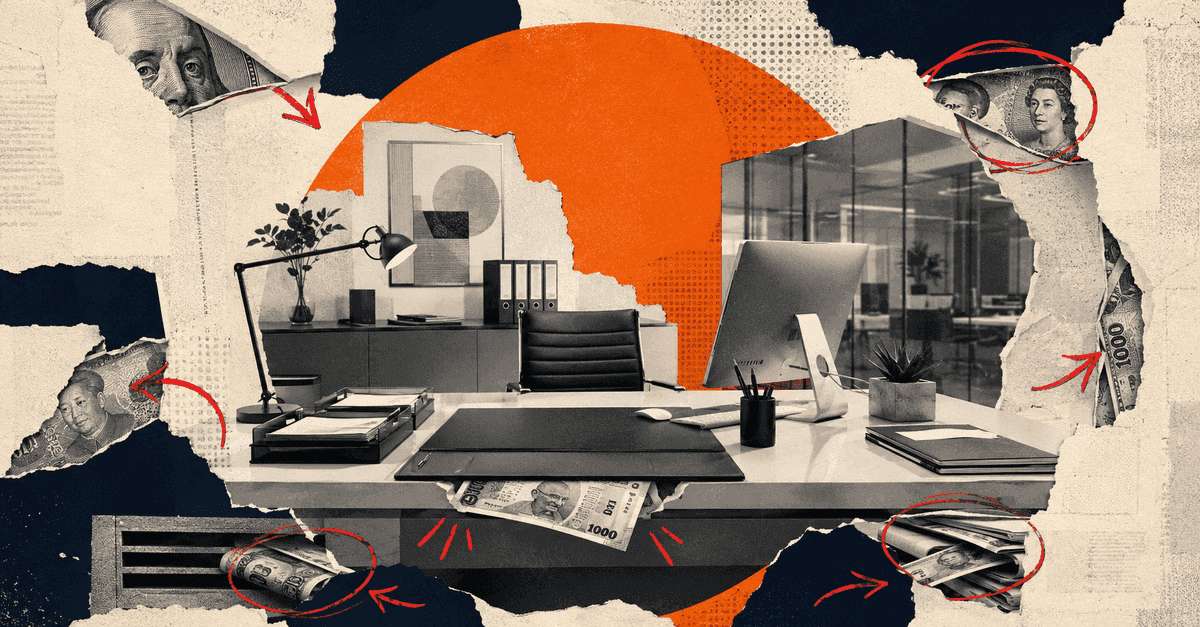
Every professional firm we talk to says the same sentence, usually early and with some relief: "we don't take cash, so the reporting stuff doesn't really apply to us."
This week AUSTRAC suspended a business whose core failure was not filing threshold transaction reports. (What the Cryptolink suspension means for you) That was a crypto ATM operator, where cash is the whole business. But the reaction we heard from professional firms was the comfortable one: couldn't be us, we don't take cash.
The Act does not care what your policy says. It cares what happened. And "what happened" has a precise trigger with a precise deadline attached.
The Rule Itself, in Two Sentences
If, in the course of providing a designated service, a customer pays you (or you pay them) $10,000 or more in physical currency, banknotes or coins, you must lodge a threshold transaction report with AUSTRAC within 10 business days of the transaction. (AUSTRAC, threshold transaction reports (opens in a new tab))
There is no discretion in it. No suspicion is required, no judgement call about whether the client seems fine. The event happens, the clock starts, and nobody reminds you it started. It is the most mechanical obligation in the whole regime, which is exactly why AUSTRAC treats missing it as a basic failure rather than a forgivable one.
Separate Payments Are Separate Transactions
The obvious reaction to a $10,000 line is to wonder whether instalments add up. For the TTR itself, they do not. AUSTRAC is explicit: if a customer makes multiple physical currency transactions, you treat each as a separate transaction, and you do not combine their values even if they happened quickly or at another location. (AUSTRAC, threshold transaction reports (opens in a new tab))
AUSTRAC's own example is a $20,000 bracelet paid off in $2,000 cash instalments over a month. Total well over the line, no single payment near it, no TTR required.
Two things follow from that, and both matter more than the arithmetic.
First, the TTR question is always about one payment: was this envelope, on this day, $10,000 or more. A $10,045 payment triggers it (AUSTRAC's other example is a $9,800 loan balance that crosses the line once a fee is added). A $9,900 payment does not.
Second, AUSTRAC attaches a warning to the very same paragraph: be aware of customers who may be structuring their transactions to avoid reporting, and consider whether a suspicious matter report is required. Which is the part that catches firms who know about the threshold.
The Structuring Twist: The Report You Don't Owe Becomes the Report You Do
A client who deliberately keeps payments under $10,000 so that "no report is needed" has not made your obligations go away. They have changed which obligation you have.
Structuring, dividing a large cash transaction into smaller ones to avoid threshold reporting, is a criminal offence, and if you have reasonable grounds to suspect a customer is doing it you must submit a suspicious matter report. If you keep acting for them, enhanced customer due diligence follows. (AUSTRAC, threshold transaction reports, structuring (opens in a new tab)) A pattern of $9,000-ish cash payments is not a clever way for the client to spare you paperwork. It is grounds to form a suspicion, and the SMR is due within 3 business days after the day you form one, 24 hours if it relates to terrorism financing. (AUSTRAC, suspicious matter reports (opens in a new tab))
AUSTRAC's worked example for jewellers describes a customer who asked a salesperson about their roster, then returned on that person's days off to make consecutive sub-$10,000 cash purchases from staff who each knew nothing about the others. No single purchase needed a TTR. The suspicion came from the pattern: same customer, similar items, consecutive days, always cash, always just under. (AUSTRAC, examples of linked transactions (opens in a new tab))
So the comfortable sentence inverts. If you genuinely never see cash, the TTR obligation costs you nothing. If you see cash arranged to stay under the line, you have the harder report to file, on a shorter clock.
Where Cash Actually Shows Up in a "Cashless" Practice
For dealers in precious metals and stones the question answers itself: accepting or paying $10,000 or more in cash is the very thing that brings you into the regime. And here, for the question of whether you are regulated at all, AUSTRAC does add payments up. A $9,000 cash deposit today and $3,000 cash tomorrow for the same item is one linked transaction of $12,000, and there is no time limit after which linked payments reset for that threshold. (AUSTRAC, examples of linked transactions (opens in a new tab)) That is a different test from the TTR, which stays per payment. (Our jeweller guide covers this end to end)
For everyone else, cash arrives at the edges, usually once a year, always as a surprise:
- A property purchaser tops up a shortfall at settlement with banknotes because a transfer did not clear in time.
- A client's parent pays the firm's invoice in cash "to keep it simple".
- A tenant hands the agency six months of rent in an envelope.
- A long-standing client of an accounting practice settles a fee from the till of their own business.
None of these people are criminals by default. That is not the point. The point is that the report is due regardless, within 10 business days, and a firm whose program says "we do not accept cash" while the front desk quietly banks an envelope has a worse problem than a missed report: a program its own records contradict.
What "We Don't Take Cash" Has to Look Like to Survive
If no-cash is your position, make it a control instead of a vibe. Four properties, none of them expensive:
- It is written down in your AML/CTF program as a policy, with a stated threshold of zero, not assumed as culture.
- The people who take payments know it is a rule. The partner knows; does the receptionist processing a card-declined client at 5pm on Friday?
- There is a refusal procedure. What happens when someone opens the envelope anyway: who is told, what is recorded, whether the payment is returned. A refusal you can evidence is a control working. A quiet exception is a finding.
- You test it. AUSTRAC's program starter kits for the new sectors ship with a TTR effectiveness check form, which tells you the regulator's expectation: not "we have a policy" but "we checked whether reality matched it".
And one more, for the day the control fails: know how you would actually lodge a TTR. The filing path through AUSTRAC Online is not hard, but 10 business days is a short runway to discover it from scratch. (Our walkthrough of SMR and TTR filing)
This Week's Version of the Check
Same discipline as the three clocks, applied to cash:
- Ask everyone who can receive a payment one question: "what would you do if a client paid in cash?" The spread of answers is your finding.
- Search your ledger for cash receipts in the last 12 months. If there are any, check for two things: any single receipt of $10,000 or more, and any client whose receipts sit repeatedly just under it.
- Put the no-cash policy (or the TTR procedure) in writing in your program if it is not there.
- Diarise the effectiveness check annually, same entry as your other program reviews. (How the week-to-week routine holds together)
Where AML Mate Fits
AML Mate's reports module tracks TTR and SMR deadlines from the triggering event and flags anything overdue on your dashboard, so the 10-day clock is never running silently. The program editor carries a cash-handling policy section, and the free compliance check at /check will show you in five minutes whether your reporting path exists anywhere outside the compliance officer's head.
"We don't take cash" might be true. This is the machinery that makes it checkable, and the machinery is what AUSTRAC examines.
This article is general information, not legal advice. For advice specific to your circumstances, consult a qualified AML/CTF professional.