
Most of the work before 1 July 2026 goes into one thing: having an AML/CTF program that is genuinely in place. (What "a program in place" actually requires) That is the right focus, and it is most of the deadline. But the program is the background. The change that will touch your daily work first, the one most likely to catch a firm out in its opening week, is not about a document at all. It is about the order you do things in.
Before, not after
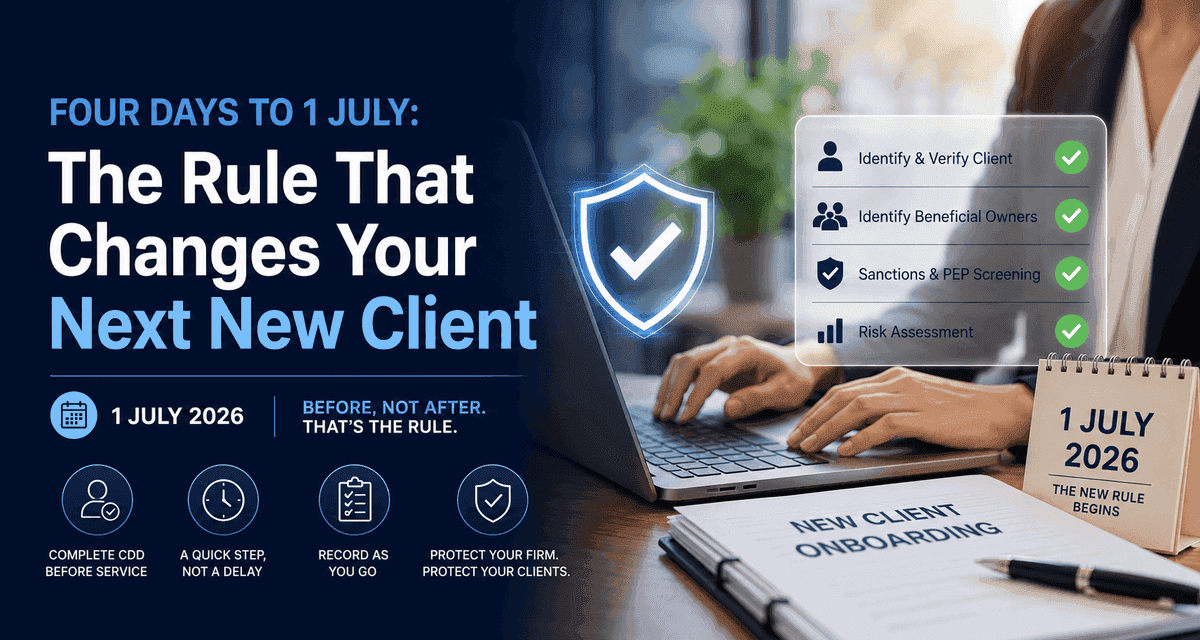
From 1 July, you carry out customer due diligence before you provide a designated service, not once the matter is already moving. That single word, before, reverses an instinct most professionals have spent a career building. The natural rhythm of a small firm is to take the client, start the work, and tidy up the paperwork later. The reformed regime flips that sequence. The check becomes a gate the client passes through before the service begins, not a form you complete afterwards.
It sounds small. In practice it is the rule that reshapes onboarding, because it changes the one thing that is hardest to change: timing.
What "before" actually means
Before that first designated service to a new client, you should be able to show that you have identified the client and verified it with reliable identification, identified the beneficial owners where the client is a company or a trust, screened the client against sanctions and politically-exposed-person lists, and assigned a risk rating. (A practical CDD checklist) For a straightforward, low-risk client none of this is heavy. It is a few minutes of structured steps. What has changed is not the effort. It is the moment you do it.
The awkward-timing problem, and how to avoid it
The friction is real and worth naming. Clients often arrive ready to move, and a verification step can feel like it slows a deal you want to win. The firms that handle this well do one thing: they make the check the first conversation rather than an interruption later. Set the expectation plainly. "We verify identity before we start, it takes a few minutes." Framed that way it reads as a normal professional step, the same as a costs agreement or an engagement letter, not as suspicion of the person in front of you. The delay people fear comes from doing the check late and under pressure. Done first, it is barely a delay at all.
When something flags
If screening returns a possible match, or the client or the transaction trips a higher-risk trigger, the rule is the same but firmer: resolve it, applying enhanced due diligence where it is called for, before you proceed. (How screening, CDD and records fit together) A possible match is not a refusal and not an accusation. It is a pause to check, exactly the kind of pause the timing rule is built to create. The point of doing the work first is that you find these things while you still have the room to act on them.
The record forms as you go
There is a quiet benefit to the new order. Because the check happens before the service, the record exists before the service does. That is precisely the evidence trail the regime expects you to be able to produce later. (The records each obligation should leave behind) A firm that does CDD first is not doing two jobs, the work and the paperwork. It is doing one job in the order that leaves a record behind it. Do it in sequence and the trail builds itself.
The same client to client
The discipline that makes any of this hold up is sameness. The same steps, before the service, for every client, recorded the same way. (How to run the program day to day) A process you apply carefully to nine clients and skip on the tenth because they were in a hurry is not nine good files. It is one gap, and it tends to be the file someone later asks about. The timing rule is only as strong as your willingness to apply it to the client you most want to say yes to quickly.
Where AML Mate fits
AML Mate is built around this order, so the gate is a quick step rather than a hold-up. New-client onboarding walks you through identification and verification, captures beneficial owners for companies and trusts, runs dated sanctions and PEP screening, and assigns a risk rating, all before you mark the client ready for service, and it records each step as you go so the file is complete the moment the work begins. Higher-risk triggers surface the enhanced steps in the same flow. Not sure you are even in scope? The free compliance check tells you in two minutes, with no login. Then start a 14-day free trial, cancel anytime, and use the days you have left to make "before, not after" the normal way your firm takes on a client. From 1 July it stops being a preference and becomes the rule.